How to Get Out of an Apartment Lease Early (Step-by-Step Guide)
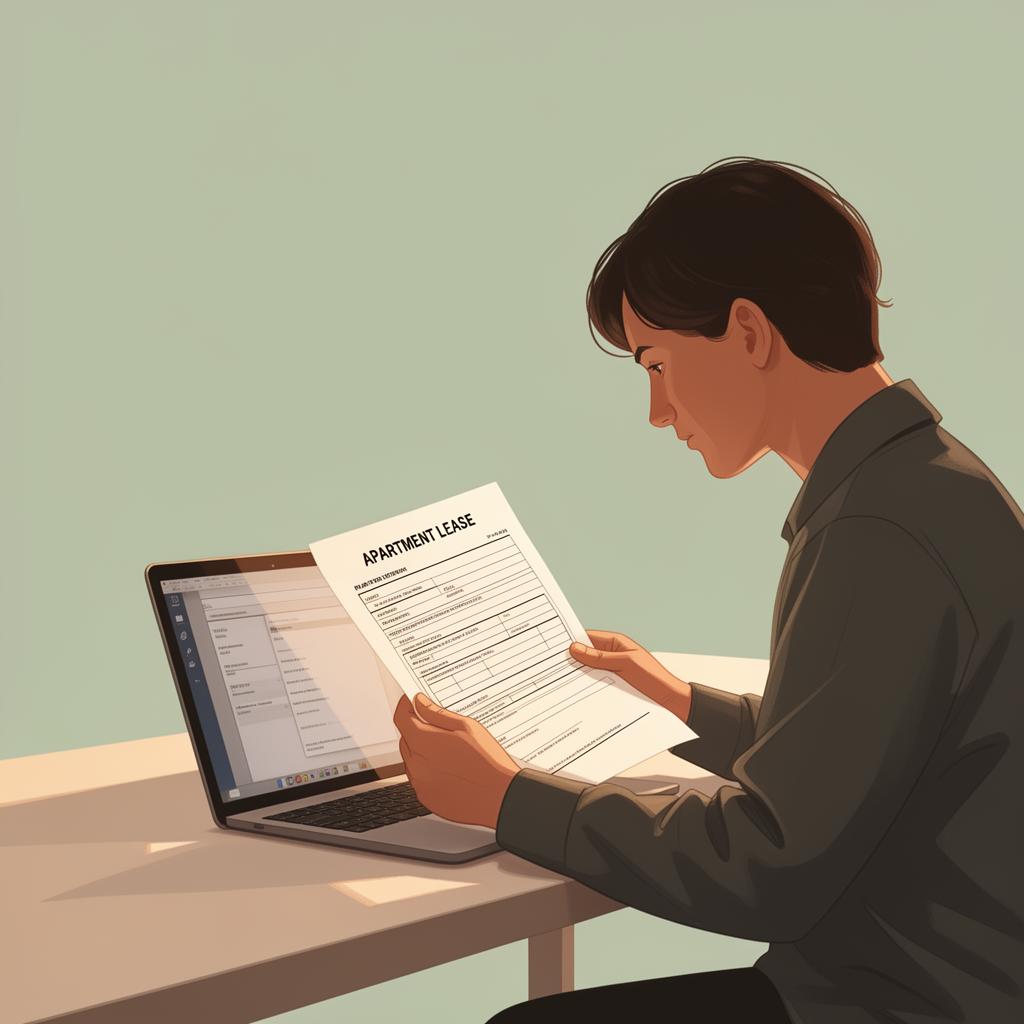
Breaking an apartment lease sounds scary — and landlords want you to think it's nearly impossible. But millions of renters exit their leases early every year without losing their shirts. Whether you got a job offer across the country, your landlord won't fix a leaking roof, or you simply need to move on, you have options.
This guide walks you through exactly how to get out of an apartment lease, from your first conversation with your landlord all the way to getting your security deposit back.
Understand what you're dealing with first
Before you do anything else — before you talk to your landlord, before you start packing — spend 20 minutes reading your lease agreement in full.
Read your lease before you do anything else
Your lease is the rulebook. It contains everything you agreed to, including what happens if you want to leave early. Look specifically for:
- An early termination clause — a section that spells out how to exit the lease legally, including required notice and fees
- A subletting or subleasing clause — whether you're allowed to find someone to take over your unit
- A buyout clause — a set fee you can pay to end the contract outright
- Required notice periods — most leases require 30 to 60 days' written notice before vacating
If your lease has an early termination clause, you're in luck. That clause is your roadmap. Follow it and you can exit cleanly with no legal complications.
Skip the reading. Upload your lease to our free AI lease analyzer and we'll find these clauses for you in 60 seconds.
Know the difference: legal exit vs. negotiated exit
There are two ways out of an apartment lease:
Legal exits happen when the law or your lease gives you the explicit right to terminate without penalty. These include military deployment, uninhabitable living conditions, domestic violence, and certain landlord violations.
Negotiated exits happen when you don't have a legal right to break the lease, but you and your landlord reach a mutual agreement — often involving a fee, a replacement tenant, or a combination of both.
Most renters end up on the negotiated path, and that's completely fine. Knowing which category you fall into determines your strategy.
Legal reasons to break a lease without penalty
In certain situations, you have a legal right to exit your lease early — no penalty, no fee, no negotiation required.
Uninhabitable living conditions
Landlords are legally required to keep rental units livable — that means working heat, plumbing, electricity, and no serious health hazards like mold or gas leaks. If your landlord fails to meet that standard after you've given written notice of the problem, most states allow you to terminate the lease early without penalty. Document every issue with photos and dated repair requests before taking this route.
Military deployment (SCRA)
The Servicemembers Civil Relief Act (SCRA) gives active-duty military members the right to break a lease without penalty if they receive deployment or relocation orders lasting at least 90 days. You'll need to provide your landlord with written notice and a copy of your orders. The lease typically terminates 30 days after your next rent payment is due.
Domestic violence protections
Most U.S. states allow survivors of domestic violence to terminate a lease early without penalty, provided you submit proper documentation — such as a protective order or police report. If this applies, contact a local legal aid office or domestic violence resource center for guidance specific to your state.
Landlord violations (illegal entry, harassment)
If your landlord enters your apartment without proper notice (typically 24 to 48 hours, depending on the state), changes the locks, or harasses you, those are grounds for early lease termination in many jurisdictions. Document every incident with dates, times, and descriptions. If the pattern is clear and documented, you may have a strong legal case to exit without penalty.
Step-by-step: how to get out of your apartment lease
If you're on the negotiated path — or just want to handle this as smoothly as possible regardless of your reason — follow these steps in order.
Step 1 – Read your lease for an early termination clause
Already covered above, but it's step one because everything flows from what your lease says. If there's a buyout clause, find out exactly what it requires: how much notice, what fee, and what documentation. A lease buyout typically costs one to three months' rent, but it's a clean exit — you pay the fee, you're done.
Step 2 – Talk to your landlord early
Don't send a formal termination letter before you've had a real conversation. The earlier you bring this up, the more goodwill you build. Call or meet in person and explain your situation honestly. You don't need to share every detail — just enough to show you're approaching this in good faith.
A landlord who knows about your situation in month three of a 12-month lease has far more time to find a new tenant than one who finds out with 30 days left. The more time they have, the less money they lose — and the less pressure they'll put on you.
Pro tip: If your landlord is reasonable and the rental market in your area is strong, they may let you out early with minimal or no fees simply because they can re-rent quickly.
Step 3 – Send a written early termination notice
Once you've had that initial conversation, follow up in writing. An early lease termination letter creates a paper trail that protects both you and your landlord. Your letter should include:
- Your full name and unit address
- The date you're writing the letter
- Your intended move-out date
- A brief reason for the early termination
- A request for acknowledgment of receipt
- Your signature
Keep a copy for yourself. Send it via email so you have a timestamped record, and consider certified mail if your lease requires written notice be delivered formally.
Step 4 – Negotiate the terms
After you've given notice, your landlord will likely come back with a termination offer — the conditions under which they'll let you out. This might include:
- Paying an early termination fee (typically one to three months' rent)
- Continuing to pay rent until a new tenant is found
- Forfeiting your security deposit
This is a negotiation, not a take-it-or-leave-it situation. If you've been a reliable tenant who pays on time, use that as leverage. If the market is hot and the landlord can re-rent quickly, point that out. Don't be afraid to counter.
If the terms feel unfair or confusing, consult a tenant's rights attorney before signing anything. Many offer free consultations.
Step 5 – Help find a replacement tenant
One of the most effective things you can do to speed up your exit is to help your landlord find someone to take over your unit. The landlord is legally required to make a reasonable effort to re-rent, but there's nothing stopping you from doing the legwork yourself.
Post the listing on:
- Zillow, Apartments.com, or Facebook Marketplace
- Your personal social media accounts
- Local neighborhood groups or community boards
- Employer or university housing boards (if relevant)
When you present your landlord with a qualified applicant, the calculus changes. They lose less money, and you get out faster. In many cases, once a new tenant signs a lease, your financial obligations end immediately.
Step 6 – Consider subletting instead
If breaking the lease outright is too costly, subletting is a middle-ground option worth exploring. With a sublet, you find someone to rent your unit from you while you remain technically on the lease. You collect rent from them and pay your landlord.
The key differences between subletting and lease assignment:
| Sublet | Lease Assignment | |
|---|---|---|
| You stay on the lease | Yes | No |
| You're liable for damage | Yes | No |
| Requires landlord approval | Usually | Usually |
Subleasing carries more risk — you're still on the hook if the subtenant doesn't pay or damages the unit. Lease assignment (where the new tenant fully takes over) is cleaner but requires your landlord's cooperation.
Check your lease first. Many leases prohibit subletting or require landlord approval. If yours does, ask your landlord anyway — some will agree when it's in their financial interest.
Step 7 – Review and sign a termination agreement
Once you and your landlord agree on terms, get everything in writing in a formal lease termination agreement. This document should include:
- The official termination date
- The agreed-upon fee, if any
- Whether rent is owed through termination or a new tenant signing
- What happens to your security deposit
- A release clause stating you have no further rent obligations after the termination date
Read this document carefully before signing. The release clause is especially important — some landlord termination offers include buyout provisions that only end your liability if a new tenant is found, which shifts risk back onto you.
Step 8 – Do a walk-through and document everything
Before you hand over your keys, schedule a move-out walk-through with your landlord. Photograph every room, every wall, every appliance. Document the condition of the unit thoroughly.
This protects you from claims that you caused damage that predated your tenancy or that occurred during the sublet period. A clear photographic record also strengthens your case for getting your full security deposit returned.
Leave the unit clean, make any minor repairs you're responsible for, and return all keys on the agreed date.
How much does it cost to break an apartment lease?
The cost varies based on your lease terms, your state's laws, and your negotiating position. Here's what to generally expect:
- Early termination fee: Typically one to three months' rent, if your lease includes this clause
- Rent through re-rental: You may owe rent until a new tenant is signed, which could be days or months
- Security deposit: In some negotiated exits, you agree to forfeit your deposit in exchange for being released from the lease
- Legal fees: If the situation escalates to court (uncommon but possible), you may incur attorney fees
The cheapest exit is almost always finding a replacement tenant quickly. The most expensive is abandoning the unit with no notice and no negotiation.
What happens if you just walk away?
Walking out without following the proper process is the worst option. Here's what you risk:
- Lawsuit for unpaid rent: Your landlord can sue you for the remaining months of rent owed under the lease
- Negative mark on your credit report: Unpaid rent sent to collections damages your credit score and can follow you for years
- Damaged rental history: Future landlords run background checks. A broken lease flagged by your previous landlord makes it harder to rent again
- Loss of security deposit: Landlords will keep the deposit, and may seek additional damages beyond it
Even if you can't pay an early termination fee right now, communicating with your landlord and making a plan is always better than disappearing.
The bottom line
Getting out of an apartment lease early is manageable if you approach it the right way. Read your lease, talk to your landlord as soon as possible, follow the written notice requirements, and document everything. Whether you have a legal reason to exit penalty-free or you're negotiating your way out, the most important thing you can do is communicate early and in good faith.
The worst outcome in almost every scenario comes from doing nothing — so start the process now, protect your rental history, and move on to your next chapter on solid footing.
Frequently asked questions
Can I break my lease if my landlord isn't making repairs?
+
Yes, in most states you can. If your landlord fails to maintain habitable conditions after you've put your repair requests in writing and given them reasonable time to respond, many states allow you to terminate the lease early without penalty. This is sometimes called constructive eviction — the idea being that the landlord's neglect effectively forced you out. Document everything: photos, emails, written notices with dates.
What should I include in an early lease termination letter?
+
Your termination letter should include your name, unit address, the date, your intended move-out date, a brief reason for leaving, and your signature. Request written confirmation from your landlord that they received it. Keep a copy for your own records and send it via email for a timestamped record.
What happens to my security deposit if I break my lease?
+
It depends on the agreement you reach. In some cases, your landlord will apply the deposit toward any unpaid rent or fees and return the remainder. In others — especially if you're negotiating a penalty-free exit — you may agree to forfeit the deposit entirely in exchange for being released from the remaining lease obligations. Never assume your deposit is automatically forfeited. Negotiate for it.
Can I break my lease for a job relocation?
+
Job relocation is not a legally protected reason to break a lease in most states. However, it is one of the most sympathetic reasons, and many landlords will work with you when they understand the situation. Some leases also include a relocation clause for this exact scenario. If yours doesn't, you're on the negotiated path — but a job offer letter goes a long way in building goodwill.
How much notice do I need to give to break my lease?
+
Most leases require 30 to 60 days' written notice before vacating. Some states mandate a minimum notice period even if your lease doesn't specify one. Check your lease first, then verify your state's landlord-tenant laws. When in doubt, give more notice than required — it costs you nothing and builds goodwill with your landlord.
This article is informational only and does not constitute legal advice. Tenant laws vary by state and individual circumstances differ. Always consult a licensed attorney before taking action on your lease.